
-
 Thứ Hai, 21 tháng 11, 2016
-
 0 Comments


Following information
about Porpoises that people can share with others, which raises a broader
and more interesting about Porpoises as below
- Porpoises are among the smallest aquatic mammals. Check out my list of fun, weird and just plain amazing fact of life I have found.

- They are related to dolphins and whales and belong to the same order, Cetacea.
- They are very similar looking to the dolphin. However, the way to distinguish them generally is from: their smaller size; they have a rounder body shape and they lack the ‘beak’ of the better known dolphins.
- There are six species of porpoise.
- Different types of porpoises include the Common or Harbour porpoise, which is dark coloured on back and white underside, for camouflage in coastal waters and is similar to the Californian porpoise; Dall’s porpoise, which has a slightly more muscular body, they are jet black on back with white patches on the belly and flanks; Burmeister’s porpoise, which is dark overall, the Dorsall (back) fin has a sharp point with ‘teeth’ on its leading edge; Finless porpoise, which are grey overall, except for paler throat and face, they have a rounded, blunt head and no dorsal fin; the Spectacled porpoise, which is blue-black on back and white on sides and under-parts, they have a rim around their eyes which resemble spectacles. That might be one of the most awesome interesting facts ever.
- Porpoises are thought to have emerged as a group of aquatic mammals about 15 million years ago, when they were confined to the north of the Pacific Basin. From these beginnings they slowly evolved into the total of six species of porpoise alive today.
- They are sociable creatures and are often found in groups of 2-20, but usually about 4.
- They are sexually mature by the age of 4-7 years, according to the species. mating season is summer in the northern hemisphere. Gestation is 11-12 months and they have 1 young.
- Young calfs are born half the length of the female and has to be brought to the surface immediately to take its first breath. The female often swims on her side as she suckles her young calf. In this way they reach the water’s surface to breathe at the same time. This only happens in the first few days after birth, and soon the calf surfaces independently and dives to resume feeding. The young often remain with its mothers after being weaned.
- The Dall’s porpoise is known to be the fastest of all the porpoises. It powers through the water at speeds of 20-30km/h. It is also famous for its ‘rooster’ spray – a stream of water that arcs up over the head as it reaches the water’s surface. They are the most sociable and are attracted to moving ships.

- The Finless porpoise, as its name suggests, has no dorsal fin. The females have been known to carry her single young, or calf, on her back as on a saddle.
- Porpoises have between 60-120 teeth which are flattened into a spade shape at the tip.
- The common porpoise makes a distinctive, explosive noise as it comes to the surface to exhale. It has also been called a ‘puffin pig.
- Similar to the dolphin, the porpoise have a wide repertoire of communication calls, including ‘clicks’ used for echo-location. That might be one of the most awesome animals facts you had no idea before.
- Their greatest threat to population is fishing nets and pollution. Some species are thought to be declining as a result.
- Another hazard of inhabiting coastal waters for the common porpoise is that it can get stranded on beaches.
-
Chủ Nhật, 20 tháng 11, 2016
-
0 Comments
Why do mosses turn brown? Keep following to get more amazing information about the mosses and other on our site
Moss, a dense, low-growing, nonflowering plant, forms a carpetlike mat that grows over top of rocks, trees and soil in your garden. Mosses require some care to thrive or you are likely to see problems, such a drying and browning. Fortunately, mosses are adaptable and easy to grow, making this problem is easily remedied.

Dried Out
Most mosses thrive in moist to damp environments with plenty of water. Without the proper moisture, moss begins to dry and turn brown. Moss turning brown due to lack of water is quickly fixed. Once given enough water, the moss becomes lush and green once again. For this reason, it is important understand the water needs for the specific species of moss growing in your garden. During periods of drought and low rainfall, water your moisture-loving mosses. Wanna take a quick look at funny pictures with captions that can help you relax effectively.
High Mineral Content in the Water
It is not enough to provide your moss with the right amount of water. The quality of the water also plays a part in its health. Moss uses water as a source of nutrients. If you notice your moss turning brown, drying out or dying, it is important to look at what type of water it's getting. Moss is sensitive to certain minerals in tap and hose water, such as calcium. Too much calcium can injure mosses. Only water your moss with distilled water or natural rainwater.
Contaminated Water
Rainwater may cause your moss to turn brown if it is contaminated with chemicals from pesticides and herbicides. For example, if you've used chemicals to dry out and remove moss from other parts of your yard, it may affect the mosses you want to grow. Flush the soil around your moss plant with clean water if you suspect herbicide damage. Problems from tainted runoff are only likely to continue in periods of drought. Once the moss is getting clean water again, it should turn a healthy green. Check out my list of fun, weird and just plain amazing fact of life I have found.
The Wrong Care
Providing moss with the right care is essential to avoid drying, browning and other potential problems. Too much sun causes browning and drying and the breakdown of the plant’s food source -- its chlorophyll. Most moss species require partial to full shade. Mosses also thrive in acidic soils. Do not apply fertilizer to moss because it can burn the moss and turn it brown. Be careful when using fertilizer on nearby garden plants that it doesn't touch the moss. Moss can also turn brown when continually walked on or stamped down by pets. Keep your moss out of areas where people walk and pets play. Most importantly, know the species of moss that you are growing and provide the appropriate care.

Is It Moss At All?
If you are providing the proper care and your moss is still browning and suffering from problems, ask yourself if what you are growing is a true moss. Irish moss (Sagina subulata) is a mosslike plant that grows in U.S. Department of Agriculture plant hardiness zones 4 through 8. Although the common name and appearance would suggest this plant is a true moss, it is not. Irish moss is an evergreen perennial, often grown as a pathway plant in between pavers and stepping stones. This plant requires different care from true moss, including full to partial sun and rich, well-draining soil. Browning and drying in Irish moss that's getting the right care may be the result of too much heat from sunlight as it reflects off stones and pavers. Fix this by providing some shade during the heat of the day. When healthy and vibrant, Irish moss produces white flowers in spring. That might be one of the most awesome interesting facts ever.
-
Thứ Tư, 16 tháng 11, 2016
-
0 Comments
I love to know and share amazing information about Newt facts that can open your mind
1. ONE SPECIES DEFENDS ITSELF WITH MOVABLE RIBS.
Prod a Spanish ribbed newt (Pleurodeles waltl) at your own risk. These flat-headed animals have a nasty surprise in store for wannabe predators: They can rotate their ribs forward so that they break through the skin, creating protective spikes. And that's not all: When the ribs break through, they're coated with a poison that is secreted simultaneously. Once danger passes, the ribs retract and the punctured skin starts to heal. Learn all valuable information you wanted about science facts via our articles.

2. IN MEDIEVAL EUROPE, NEWTS WERE ASSOCIATED WITH EVIL SPIRITS.
Legend had it that witches could summon demons via a newt-based brandy. The Bard himself referenced this in Macbeth: Act IV opens with Shakespeare’s witches tossing such ingredients as “eye of newt and toe of frog” into their special brew.
3. SOME CAN RE-GROW THEIR EYE LENSES AT LEAST 18 TIMES.
That fact that most lizards can replace a lost tail is common knowledge, but newts make this talent look like a party trick: After losing a limb, they can grow another one in a matter of weeks.
Newts are also capable of regenerating tails, jaws, spinal cords, heart ventricles, and eyes. But can they do so indefinitely? Between 1994 and 2010, a team from University of Dayton tested the limits of this healing superpower. Over those 16 years, half a dozen Japanese newts (Cynops pyrrhogaster) had their eye lenses surgically removed 18 times apiece. The results were unbelievable: Not only did new lenses appear after every single extraction, but the replacements functioned just as well as the originals had.
According to Panagiotis Tsonis, who headed up the experiment, the discovery could have enormous medical implications. “We are still a long way from relating this to humans,” he told Wired UK, “but what this shows is that the newt is an excellent source for finding answers to regeneration.”
4. THE EASTERN NEWT (NOTOPHTHALMUS VIRIDESCENS) IS NEW HAMPSHIRE'S STATE AMPHIBIAN.

In 1985, New Hampshire became the first state to designate an official amphibian. Seventeen others have since done likewise, but they’ve all picked non-newts. Notophthalmus viridescens has a huge range extending from Canada to Florida and from New England to Kansas. Anyway, this may be one of the most fascinating animal facts until now
5. CERTAIN NEWTS WILL METAMORPHOSE TWICE.

Like most amphibians, newts start out as gilled, water-bound larvae that grow up into air-breathing adults. However, some actually assume an intermediate form. After leaving their larval stage, many species, like the eastern newt, become bumpy-skinned juveniles, or efts, adapted for life on dry land. A few years later, they return to the water as aquatic adults, complete with webbed feet and paddled tails.
6. AMOROUS MALES SECRETE REALLY POTENT PHEROMONES.

The key to a female newt’s heart is through her nostrils. When mating season rolls around, male Alpine (Ichthyosaurua alpestris) and palmate (Lissotriton helveticus) newts release a titillating cocktail of pheromones into the water to attract nearby females. The courtship ritual begins with a male waving its tail at a female, who then follows him around for a bit. When she's ready to mate, she touches her nose to his tail, and he deposits a spermatophore on a leaf or other surface; he'll lead her to it, and it will stick to her cloaca and eventually lead to insemination.
A 2011 experiment showed that the pheromones might work a little too well—in fact, the scent rendered captive females uncontrollably lustful. No males were present, so they started courting each other. “We were convinced that if we put in a plastic toy moving at the right speed, they would follow it,” said researcher Franky Bossuyt of Vrije Universiteit Brussel.
7. SPANISH RIBBED NEWTS HAVE BECOME AMPHIBIOUS ASTRONAUTS.

Between 1985 and 2005, six different missions sent Pleurodeles waltl into orbit. Astronomers keep choosing this species in part because of its superhuman healing ability. Does a brief stint in the final frontier affect the ribbed newt’s limb regeneration process? For the most part, the answer is no—except for when you launch one that’s currently growing a new leg. Being in space slows down the appendage’s development. But when the newt returns to Earth, the growth rate accelerates beyond what’s considered normal.
Scientists have also studied the effects of extraterrestrial travel on P. waltl embryonic development. Females give birth to live larvae and can keep sperm “on hold” inside their bodies for up to five months. When they detect the right hormone, the newts fertilize their eggs with this stored sperm. So we can observe P. waltl embryos that were actually conceived in outer space. Unfortunately, those fetuses are mostly deformed. Those who loves to discover nature will not want to miss our wide range of factoflife articles.
8. THEY MAKE BARELY AUDIBLE NOISES.

Newts may not be as vocal as frogs and toads, but if you listen closely, you just might hear them chatting. Eastern newts, for example, emit a faint “tic-tic-tic” sound. Meanwhile, California newts (Taricha torosa) will click while walking through unfamiliar terrain, squeak when handled, and ward off their rivals with a whistle.
-
Chủ Nhật, 13 tháng 11, 2016
-
0 Comments
This writing is so amazing. I just wanna all of you can enjoy it. Keep seeing to enjoy Gerbil interesting facts you probably didn't know before.
Gerbils are mammals that are native to northern China. In 1954 gerbils arrived in the United States to be used in research and quickly won the hearts of lab workers who began taking them home as pets.
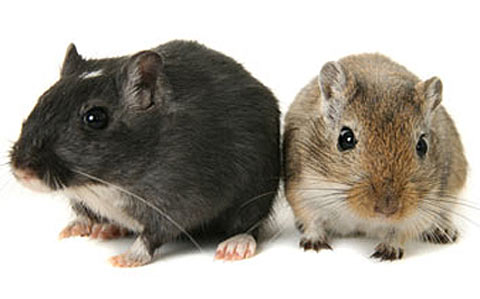
- Gerbils were originally known as ‘desert rats’ before they were introduced to North America and Europe as a companion species. Although they are rodents, they are a distinct group of animals from rats.
- Gerbils are able to shed their tail if it gets caught. This self-defence adaptation allows them to escape predators that are able to catch their tail as they try to flee. Their tails are around the same size as the rest of their body.
- Gerbils build extensive networks of underground tunnels. They spend most of their time in these burrows, only tending to leave to find food and water.
- Gerbils’ whole bodies, including their tails, are covered with fur. This is important for protecting them from getting sun-burnt in the hot desert regions.
- Gerbils have a quiet and calm nature. They are inquisitive and curious and not easily startled.
- When sensing danger, the normally quiet gerbil will let out a squeal and thump its back legs like a rabbit to warn others of the threat. Let’s discover some interesting science facts that will amaze you.
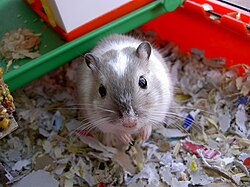
- Rather than using water, gerbils wash using sand. They roll around in the sand, which gets any debris off them and leaves them with a smoother and shinier coat.
- There are over 100 different species of gerbil. The largest being the Great Gerbil, Rhombomys opimus, which is native to Turkmenistan and can grow up to 16 inches long. The most common species kept as a pet is the Mongolian gerbil, Meriones unguiculatus. The Mongolian gerbil’s scientific name means ‘small-clawed warrior’.
- Gerbils are social animals, and live in groups in the wild. In domestic situations, unfamiliar gerbils are likely to be very aggressive to each other if forcibly introduced while still having contrasting scents.
- Gerbils are playful animals, and will often box and wrestle each other. Grooming is often carried out simultaneously here, illustrating that it is not an aggressive act. These dummy-fights can be vital for allowing young gerbils to learn to defend themselves in later life. It also helps maintain social bonds, although in adults such boxing can become a means of establishing rank in the dominance hierarchy.
Are you bored? Let’s have a quick look at our funny images that are bound to bring smile on your face.
-
Thứ Năm, 10 tháng 11, 2016
-
0 Comments
Read on and enjoy a variety of interesting information and interesting facts about Cow that you didn't know before

- In deep mud, cows can run faster than horses!
- A cow has one stomach with four compartments. The rumen, reticulum, omasum and the abomasum.
- Cow are ruminates meaning they can digest food that can normally not be digested.
- Like a human’s fingerprints, no two cow’s spots are exactly the same.
- A cow is pregnant for nine months. A calf is about 90 pounds when it is born.
- Cows have an excellent sense of smell. They can smell up to 5 miles away!
- Cattle are herbivores that eat vegetation such as grass.
- Cattle stomachs have four chambers which help break down what they eat
- There are well over 1 billion cattle in the world.
- Cattle are sacred in India.
- There are an estimated 300 million cattle in India.
- Young cattle are generally known as calves.
- Like many other grazing animals cattle have one stomach which is divided into four compartments or chambers: the rumen, reticulum, omasum and abomasum. This allows them to digest grain and grasses most effectively.
- Cattle have almost 360° panoramic vision. This helps them to see predators coming from any direction. Enjoy the best collection of animals facts on our site to widen your knowledge.
- Cattle have an excellent sense of smell. They can detect odours up to five miles away. They can also hear both low and high frequency sounds beyond human capability.
- The cow is a protected animal in Hinduism, and Hindus do not eat beef. Cows are honoured at least once a year, on Gopastami. On this day cows are washed and decorated in temples.
- Mahatma Ghandi described a cow as “a poem of compassion”, also stating that “I worship the cow and I shall defend its worship against the whole world”.
- The meat of cows is widely eaten by people across the world. Cows' milk is also drunk and used to make other products such as cheese. Many people who consume animal products would like to choose products from animals kept in higher welfare systems. However welfare labelling on products can be confusing.
- Adult females are generally called cows.
- Adult males that are not castrated are generally called bulls.
- Cattle are red/green color blind.
- In the sometimes controversial sport of bull fighting, bulls are angered by the movement of the cape rather than its red color.
- Cattle are farmed for a number of agricultural products including meat and dairy products.
If you’re looking for the most interesting tigers facts, you’re at the right place. Let’s check out now.
-
Thứ Hai, 7 tháng 11, 2016
-
0 Comments
Let's discover some animal facts that are bound to bring smile in your face: Lizards and what you need to know
- There are some species of Lizards with very small legs or have no legs. They are often mistaken though for a type of snake. One way to tell is to look for eyelids and to see if you can find external ears. If those physical characteristics are found you will be able to identify it as a Lizard.
- Lizards are able to smell by tasting the air around them. This is why they are often seen with their tongues going in and out at a rapid pace.
- For the most part Lizards aren’t dangerous. There are two species though that have a dangerous venom. They are the Gila Monster and the Mexican Beaded Lizard.
- The largest species is the Komodo Dragon. It can grow to a size of up to 10 feet. The smallest species are just a couple of centimeters long.

- It is possible for the teeth of a Lizard to be replaced throughout their life. There are a few species though that don’t do this.
- There are some species of Lizards that have the ability to squirt blood out of their eyes. They have horns and they are able to squirt blood for a distance of up to 4 feet. This is a way for them to be able to defend themselves against predators or when they feel there is any type of threat to them. Do you want to check out our long and rich source of tigers facts in your spare time?
- Lizards are able to conserve water by excreting salt. When water is in short supply they will do this often and have a white reside on the body.
- The Gecko is the only species of Lizard with vocal cords so they are the only ones that can make sound. The other species all use body language as a way to communicate with each other.
- There are more than 5,600 different species of Lizards around the world.
- There is evidence that Lizards have been on Earth for more than 200 million years. It is believed that some of them used to be as large as the dinosaurs.

- The Chameleon is able to change the color of the body. This allows it to have a method of hiding from predators as it will blend into the surroundings.
- Lizards live everywhere in the world except in Antarctica.
- Lizards grow for their entire lives. They will shed their skin when they need to grow more.
- All species of Lizards are cold blooded creatures.
- Lizards enjoy spending time basking in the sunlight.
Just keep checking out our site everyday to get more updated news and information about everylife aspects as animal, plant or science facts and so on.
-
Thứ Tư, 2 tháng 11, 2016
-
0 Comments
Moon's formation is so amazing and many of us want to discover it. So now, just keep reading to along with us find out what's new about the moon formation
For almost 30 years, planetary scientists have been quite happy with this explanation--with one major exception. Although this scenario makes sense when you look at the size of the moon and the physics of its orbit around Earth, things start to break down a little when you compare their isotopic compositions--the geological equivalent of a DNA "fingerprint." Specifically, Earth and the moon are too much alike.

The expectation has long been that the moon should carry the isotopic "fingerprint" of the foreign body, which scientists have named Theia. Because Theia came from elsewhere in the solar system, it probably had a much different isotopic fingerprint than early Earth.
Now, a team of scientists at the University of Maryland has generated a new isotopic fingerprint of the moon that could provide the missing piece of the puzzle. By zeroing in on an isotope of Tungsten present in both the moon and Earth, the UMD team is the first to reconcile the accepted model of the moon's formation with the unexpectedly similar isotopic fingerprints of both bodies. The results suggest that the impact of Theia into early Earth was so violent, the resulting debris cloud mixed thoroughly before settling down and forming the moon. The findings appear in the April 8, 2015 advance online edition of the journal Nature.
"The problem is that Earth and the moon are very similar with respect to their isotopic fingerprints, suggesting that they are both ultimately formed from the same material that gathered early in the solar system's history," said Richard Walker, a professor of geology at UMD and co-author of the study. "This is surprising, because the Mars-sized body that created the moon is expected to have been very different. So the conundrum is that Earth and the moon shouldn't be as similar as they are."
Several different theories have emerged over the years to explain the similar fingerprints of Earth and the moon. Perhaps the impact created a huge cloud of debris that mixed thoroughly with the Earth and then later condensed to form the moon. Or Theia could have, coincidentally, been isotopically similar to young Earth. A third possibility is that the moon formed from Earthen materials, rather than from Theia, although this would have been a very unusual type of impact.
To tease out an explanation for these science facts, Walker and his team looked to another well-documented phenomenon in the early history of the solar system. Evidence suggests that both Earth and the moon gathered additional material after the main impact, and that Earth collected more of this debris and dust. This new material contained a lot of Tungsten, but relatively little of this was of a lighter isotope known as Tungsten-182. Taking these two observations together, one would expect that Earth would have less Tungsten-182 than the moon. It may be one of the most awesome infor from factoflife we’ve enjoyed.
Sure enough, when comparing rocks from the moon and Earth, Walker and his team found that the moon has a slightly higher proportion of Tungsten-182. The key, however, is how much.
"The small, but significant, difference in the Tungsten isotopic composition between Earth and the moon perfectly corresponds to the different amounts of material gathered by Earth and the moon post-impact," Walker said. "This means that, right after the moon formed, it had exactly the same isotopic composition as Earth's mantle."
This finding supports the idea that the mass of material created by the impact, which later formed the moon, must have mixed together thoroughly before the moon coalesced and cooled. This would explain both the overall similarities in isotopic fingerprints and the slight differences in Tungsten-182.
It also largely rules out the idea that the Mars-sized body was of similar composition, or that the moon formed from material contained in the pre-impact Earth. In both cases, it would be highly unlikely to see such a perfect correlation between Tungsten-182 and the amounts of material gathered by the moon and Earth post-impact.
"This result brings us one step closer to understanding the close familial relationship between Earth and the moon," Walker said. "We still need to work out the details, but it's clear that our early solar system was a very violent place."
You might be like to see weird but true, crazy, fun, amazing facts, fact of life, fact of the day, and funny videos, video clips, joke of the day, images, photos.
Đăng ký:
Bài đăng (Atom)


0 nhận xét: